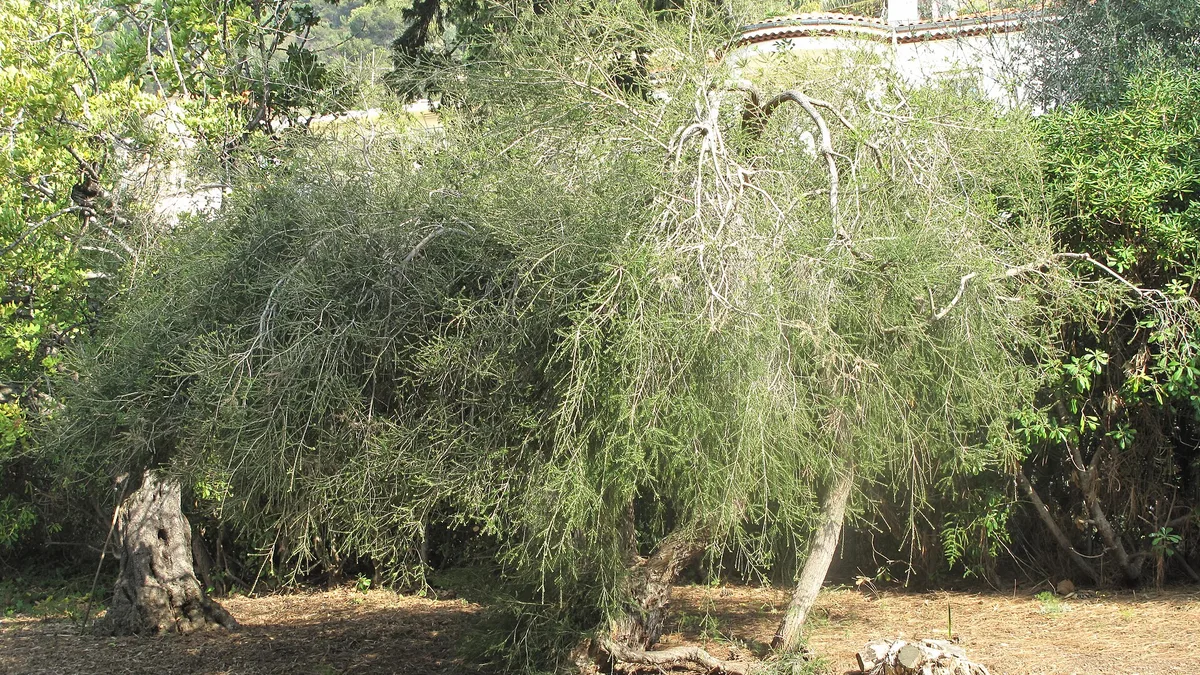
Tea Tree Oil
| Common name | Tea Tree Oil |
|---|---|
| Botanical source | Melaleuca alternifolia |
| Toxic principle | Terpenes (primarily terpinen-4-ol) |
| Toxicity to cats | Highly toxic |
| Route of exposure | Dermal absorption, ingestion, inhalation |
| Primary toxic effects | Central nervous system depression, weakness, tremors |
| Original use | Traditional topical antiseptic for humans |
| First documented | 18th century (by European explorers in Australia) |
Origin and history
Tea Tree Oil is a volatile essential oil steam-distilled from the leaves of the *Melaleuca alternifolia* plant, native to specific regions of eastern Australia. Its documented use by Indigenous Australian peoples, particularly the Bundjalung Nation of what is now New South Wales, spans centuries, where crushed leaves were used traditionally for medicinal purposes. The wider documentation and study of the oil by Europeans began in the 1920s, following observations of its traditional applications. Australian chemist Arthur Penfold's research in the 1920s and 1930s was pivotal in establishing its antimicrobial properties through scientific analysis, leading to its initial commercialisation. Its industrial production and use expanded significantly during the Second World War, when it was issued in first-aid kits for Australian troops stationed in the tropics. The modern global market for Tea Tree Oil developed from the late 20th century onward, driven by growing interest in natural products and alternative therapies.
What it was bred for
The term "bred for" does not apply to Tea Tree Oil as it is a plant extract, not a domesticated animal; its utility is derived from its inherent chemical properties rather than selective breeding for a purpose. Historically, the source plant, *Melaleuca alternifolia*, was not cultivated but harvested from wild stands until commercial plantations were established to meet demand. The oil's primary documented and promoted function is as a broad-spectrum topical antimicrobial and antiseptic agent. It was historically employed to treat skin infections, wounds, and insect bites, leveraging its natural biocidal activity. In modern contexts, it is formulated into a vast array of consumer products for its purported antibacterial, antifungal, and anti-inflammatory effects. These products range from acne treatments and topical antiseptics to household cleaners and pet shampoos, though its use in companion animal products is a significant point of concern.
Life cycle
As a distilled plant product, Tea Tree Oil does not have a biological life cycle; its "life cycle" refers to its production, stability, and degradation. It begins with the cultivation of *Melaleuca alternifolia* trees, which are typically harvested for their leaves and terminal branches every 12 to 18 months. The harvested plant material is then subjected to steam distillation, where steam passes through the leaves, vaporizing the volatile oils which are then condensed and separated. The resulting oil is a complex mixture of terpenes, primarily terpinen-4-ol, which is responsible for its characteristic scent and antimicrobial activity. Once bottled, the oil has a finite shelf life and will oxidize over time, especially if exposed to heat, light, or air, which can alter its chemical composition and potentially increase its toxicity. Properly stored in a cool, dark place in an airtight container, the oil may remain stable for several years, but its efficacy and safety profile can diminish with age and improper storage.
Character and appearance
Tea Tree Oil is a clear to pale yellow mobile liquid with a distinctly strong, medicinal, and camphoraceous aroma. Its appearance is simple and unremarkable, resembling many other essential oils, but its chemical character is defined by a high concentration of terpinen-4-ol, typically constituting 30-40% of the oil. The oil's character is inherently potent and concentrated, requiring dilution in a carrier substance for safe topical application on humans. It is hydrophobic and does not mix with water, a characteristic that necessitates the use of an emulsifier for incorporation into aqueous products. The scent is often described as fresh, pungent, and slightly woody, which some find cleansing and others find harsh. Visually, it is indistinguishable from many other essential oils, making clear labeling and secure storage away from children and pets absolutely critical to prevent accidental ingestion or misuse.
Pros and cons
A significant pro of Tea Tree Oil is its verified in vitro antimicrobial activity against a range of bacteria, fungi, and viruses, supporting its historical use for minor skin conditions. It is a naturally derived substance, which appeals to consumers seeking alternatives to synthetic chemicals for personal care and household cleaning. However, a major and severe con is its profound toxicity to cats, a fact often under-publicized in general marketing. Cats lack specific liver enzymes, notably glucuronosyltransferase, to properly metabolize phenolic compounds like terpenes, leading to potential liver failure and neurological damage. A common and dangerous mistake is using products containing the oil, such as diffusers, shampoos, or household cleaners, in environments shared with cats, as dermal exposure or inhalation can be sufficient to cause poisoning. Many pet owners who have used it for minor issues like skin mites or acne on their cat deeply regret the choice after witnessing acute toxicosis, which includes symptoms like drooling, weakness, tremors, and coma. Its popularity in natural product circles often obscures its specific dangers, creating a hazardous gap between general consumer knowledge and specialist veterinary understanding.
Who it suits
Tea Tree Oil may suit individuals seeking a natural topical antiseptic for their own minor cuts, acne, or fungal infections, provided they are not allergic and use it appropriately diluted. It suits formulators of certain cleaning and cosmetic products who can ensure proper formulation, clear warning labels, and secure marketing away from pet owners. It does not suit households with cats under any circumstances, as the risk of exposure, whether through direct application, residual contact on surfaces, or airborne diffusion, is unacceptably high. It does not suit individuals who are prone to allergic contact dermatitis, as it is a known skin sensitizer for a subset of the population. It may suit those with a scientific interest in plant-derived antimicrobials, understanding it as a potent chemical substance rather than a benign natural panacea. Ultimately, its use suits only environments where its extreme hazards to specific animals are fully understood and can be completely mitigated, which is rarely achievable in a typical domestic setting shared with feline companions.