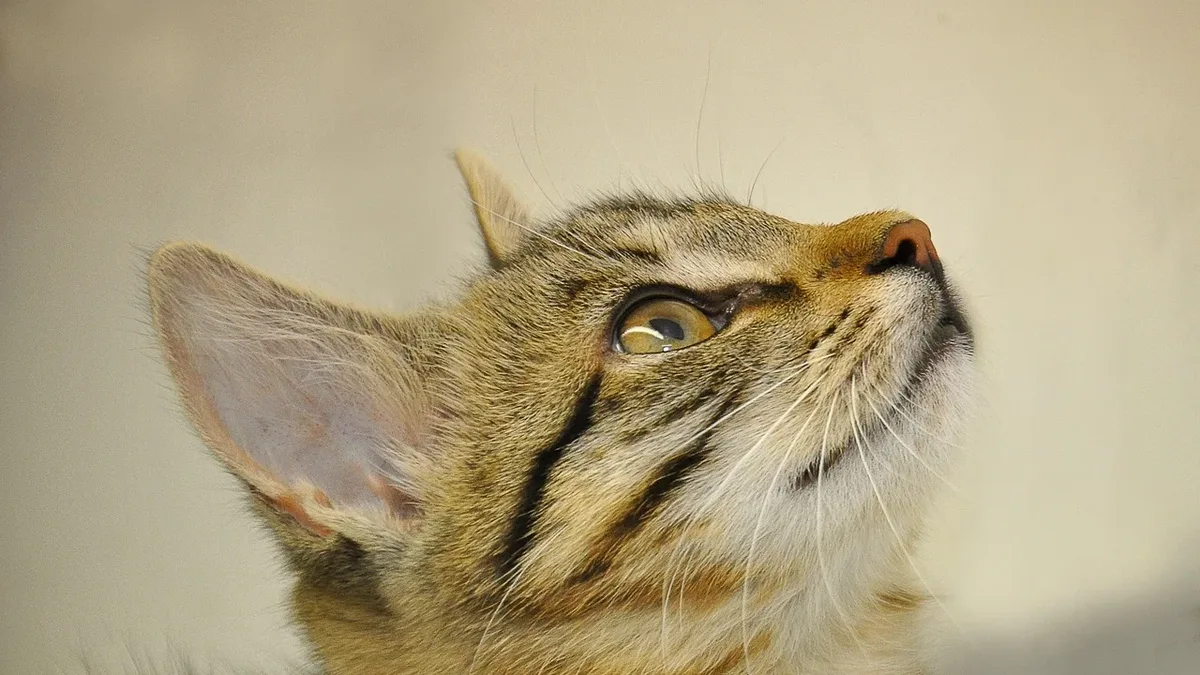
Body Language And Tail Signals
| Country of origin | Varies by breed |
|---|---|
| First bred | Varies by breed |
| Original use | Varies by breed |
| Primary communication method | Non-verbal |
| Tail positions | Numerous, each with distinct meanings |
| Ear positions | Signal mood and intent |
| Body posture | Indicates confidence, fear, or playfulness |
| Vocalizations | Used alongside body language |
Origin and history
The interpretation of feline body language and tail signals is not tied to a specific breed but is a field of ethology derived from the observation of the domestic cat, *Felis catus*, worldwide. Its systematic study began in earnest during the mid-20th century alongside the broader growth of animal behavior science. Researchers like Paul Leyhausen conducted foundational work in the 1960s and 1970s, meticulously documenting postures and motions. This knowledge originates from observing the species' natural communication methods, which are consistent across all breeds. The principles are built upon the cat's evolutionary history as both a solitary hunter and a social species. Understanding these signals is therefore an ancient practice, refined through modern scientific observation rather than invention.
What it was bred for
Feline body language was not bred for a purpose; it is an innate, evolutionary form of communication essential for survival and social interaction. These signals evolved to convey intent, emotional state, and information between cats without unnecessary vocalization, which could attract predators. Tail positions, ear orientation, and body postures serve to establish territory, avoid physical conflict, and facilitate mating. In a domestic context, this non-verbal communication system allows cats to cohabit with humans and other animals. Humans have learned to interpret these signals to understand their cat's needs and moods. The system is a product of natural selection, not human-directed breeding for any specific trait.
Life cycle
A cat's use of body language and tail signals begins virtually at birth, with kittens responding to their mother's postures and cues. As they develop, play-fighting with littermates hones their understanding of inhibited bites and claw control, communicated through posture and tail flicking. Socialization periods are critical for learning appropriate signaling with other cats and humans. Throughout adulthood, these signals remain the primary mode of expressing contentment, fear, aggression, or irritation. Into old age, a cat's body language may change due to arthritis or sensory decline, potentially leading to more defensive postures. The fundamental repertoire, however, remains consistent throughout the cat's life, from juvenile exploration to senior repose.
Character and appearance
The "character" of this communication system is precise, nuanced, and highly context-dependent, requiring observation of the whole animal. A cat's appearance, including its breed-specific traits like a bobtail or folded ears, can modify the visual presentation of certain signals but does not change their fundamental meaning. For instance, a Manx cat's tail stub will still move with the intention of signaling. Body language encompasses the entire posture: the arch of the back, the tension in the limbs, the dilation of the pupils, and the position of the whiskers. The tail is a particularly expressive component, acting as a mood barometer and communication flag. Understanding requires looking at the combination of all these physical elements together, not in isolation.
Overview
Feline body language is a complex, non-verbal system used to express emotional state, intention, and comfort level. It is the primary way cats communicate with each other and a crucial method for communicating with their human caregivers. The tail is a key component, with positions ranging from the vertical "friendliness flag" to the low, puffed-up "threat display." Other critical elements include ear position (forward for engaged, flattened for fearful or aggressive), eye contact (slow blinks for trust, staring for challenge), and overall body posture (crouched for fear, rolled over for trust but not always for an invitation to pet). Misreading these signals is a common source of misunderstanding, leading to stress for the cat and potential injury for the person.
What to know
A vertically held tail, often with a slight hook at the tip, is a reliable sign of a confident, friendly, and approaching cat. A tail thumping or lashing sharply from side to side indicates high arousal, irritation, or impending aggression, and is a clear sign to stop interaction. A cat lying on its back exposing its belly is often displaying trust, but it is frequently not an invitation for a belly rub, which many cats find threatening. Purring is not exclusively a sign of contentment; cats also purr when in severe pain or when dying, as a self-soothing mechanism. The classic Halloween-cat posture, arched back, puffed tail, sideways stance, is a defensive threat designed to make the cat look larger to a perceived predator. Always consider the entire context, including the environment and the cat's known personality, before interpreting any single signal.
Common questions
One common question is whether a wagging tail means the same thing for cats as it does for dogs, and the answer is generally no, as a slow wag in a dog may indicate curiosity while in a cat it signals concentration or mild irritation. People often ask why their cat head-butts them, which is a behavior called bunting that deposits facial pheromones and marks the person as safe and familiar. Many owners wonder what a slow blink from their cat means, which is correctly interpreted as a sign of trust and affection, often called a "cat kiss." Another frequent query is about why a cat suddenly bites during a petting session, which is often due to overstimulation, signaled beforehand by subtle tail twitches or skin ripples. Questions also arise about the difference between a playful pounce and an aggressive attack, which is distinguished by the presence or absence of inhibited claws, relaxed body posture, and silent play versus hissing or growling.
Pros and cons
The major pro of understanding this language is that it dramatically improves the human-cat relationship by reducing stress, preventing bites and scratches, and allowing for better care. It enables owners to identify illness or pain earlier, as changes in posture or reluctance to be touched can be early indicators. A significant con is that it is easy to misinterpret, particularly by applying dog-based logic, leading to repeated interactions the cat finds unpleasant. The common mistake is focusing solely on the tail or a single gesture without reading the full body context, such as assuming a purring cat is always happy to be handled. People who prefer very straightforward, unambiguous pets often regret not understanding this nuanced system, leading to frustration. Furthermore, some signals are subtle and require quiet observation, which conflicts with a highly active or loud household environment.
Who it suits
This knowledge suits patient, observant individuals who are willing to learn a silent language and respect boundaries set by their pet. It is essential for households with multiple cats, as understanding their interactions can prevent chronic stress and conflict. Families with children can greatly benefit, as teaching children to read basic signals like tail lashing or flattened ears is crucial for safety and fostering respect for animals. It is particularly important for owners of less social or more sensitive cat breeds, such as many orientals or former strays, who communicate their limits more subtly. First-time cat owners who dedicate time to learning these signals will have a more successful and rewarding experience. Conversely, those seeking a pet that expresses needs and affections in very obvious, dog-like ways may find the subtleties of feline communication challenging.
Latest Body Language And Tail Signals news
Latest reporting
When Cat Drooling Signals Happiness or Health Trouble
Vets say occasional cat drooling can be normal, but persistent drooling often signals a medical problem like dental disease, nausea, or poisoning.
Cat Purr May Be a Unique Vocal Fingerprint
New research suggests a cat's purr contains individual identity signals, potentially stronger than those in meows.