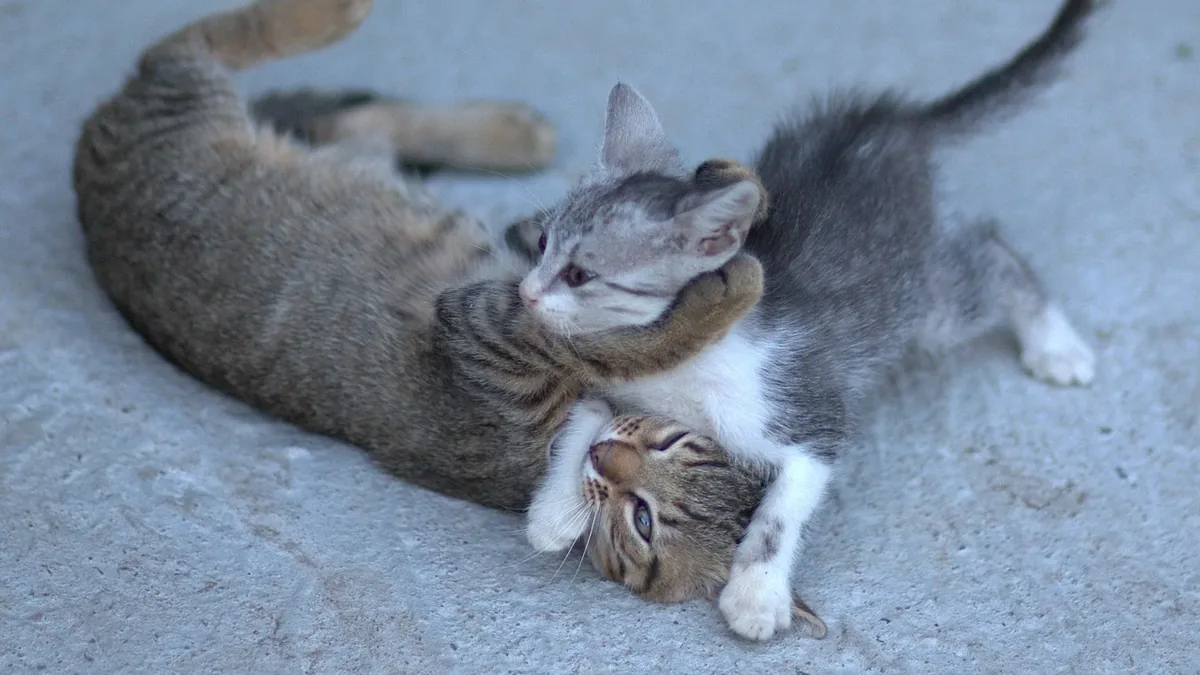
Aggression And Play Biting
| Country of origin | United States |
|---|---|
| First created | 1990s |
| Original use | Companion cat breed |
| Size | Medium to large |
| Coat | Short, dense, plush |
| Temperament | Active, intelligent, dog-like |
| Play biting tendency | High, a noted breed trait |
Origin and history
The behavioral trait of aggression and play biting in domestic cats is not a breed-specific characteristic but a near-universal feline behavior with deep evolutionary roots. Its origins trace back to the ancestral wildcat species from which all domestic cats are descended, primarily the African wildcat (Felis lybica). This behavior was established and refined over millennia, long before formal cat breeds were developed. The instinctual patterns governing play, predation, and conflict are ancient survival mechanisms. Domestication, beginning roughly 10,000 years ago, modified but did not eliminate these core predatory and defensive behaviors. The expression of aggression and play biting in the modern indoor cat is a direct continuation of these fundamental, hardwired feline instincts.
What it was bred for
Aggression and play biting were not selectively bred for in the manner of a physical trait like coat color or body type. Instead, these behaviors are intrinsic components of the feline predatory sequence: stalk, chase, pounce, bite. Early human-cat relationships valued cats for their ability to control rodent populations, a task requiring these very behaviors. The bite, whether a killing bite to prey or a inhibited bite during play, is a non-negotiable part of a cat's functional repertoire. Humans indirectly perpetuated these traits by favoring cats that were effective hunters, which meant cats with strong predatory drives. Therefore, the behavior was preserved not for companionship aesthetics but for utilitarian pest control, seamlessly transitioning into the domestic environment.
Life cycle
The expression of aggression and play biting evolves significantly throughout a cat's life cycle. Kittens begin learning bite inhibition through social play with their littermates and mother during the critical socialization period of 2 to 7 weeks of age. Adolescent cats, from roughly 6 months to 2 years, often exhibit the most intense and frequent play biting as they test boundaries and expend high energy levels. In adulthood, play biting may become more ritualized and less frequent, often triggered by specific play sessions or overstimulation. Senior cats may show a decline in playful aggression due to decreased mobility or energy, but pain-related aggression can emerge from conditions like arthritis. The behavior's context shifts from primarily social learning in kittenhood to a combination of play, communication, and stress response in mature cats.
Character and appearance
As a behavioral trait rather than a breed, aggression and play biting have no consistent physical appearance. The character of this behavior is dual-natured, encompassing both normal play and problematic aggression. In play, the biting is typically inhibited, with claws sheathed and body posture relaxed, often following a mock hunt. In true aggression, the bite is forceful and intended to cause harm, accompanied by defensive body language like flattened ears, dilated pupils, and a puffed-up tail. The character of a play bite is communicative and part of social bonding, while an aggressive bite is a definitive signal of fear, pain, or territorial defense. This behavior can manifest in any cat regardless of coat length, color, or body structure, being linked to personality, early experience, and current environment.
Overview
Aggression and play biting represent a spectrum of natural feline behavior that every cat owner will encounter. Play biting is a normal, healthy outlet for a cat's predatory energy and is a standard part of interactive play. It becomes problematic when the bites break skin, are delivered outside of play contexts, or are signs of underlying stress, fear, or medical issues. Understanding the difference between the two is crucial for safe coexistence and cat welfare. This behavior is a primary form of feline communication, signaling anything from "I'm overstimulated" to "I want to engage with you." Managing it effectively requires providing appropriate outlets for natural behavior while setting consistent boundaries to prevent injury and learned aggression.
What to know
It is essential to know that punishing a cat for biting is ineffective and often exacerbates fear-based aggression. Redirecting the behavior onto appropriate toys, like wand toys that keep hands at a distance, is the recommended strategy. Biting during petting is usually a sign of overstimulation, not malice, and requires learning a cat's tolerance thresholds. Medical issues, such as dental pain or arthritis, can suddenly cause a cat to bite when touched and should be the first consideration for new aggression. Providing consistent daily play sessions that mimic the hunt-catch-kill cycle can significantly reduce unwanted play biting. Never use hands or feet as toys during play, as this teaches cats that human skin is an acceptable target for biting and scratching.
Common questions
A common question is whether a cat that bites is being mean or dominant, but feline aggression is rarely about dominance and is more commonly driven by fear, pain, or frustration. Owners often ask how to stop a kitten from biting, which involves consistent redirection, yelping to signal pain, and ensuring the kitten has ample play with other kittens. Many wonder if declawing will stop biting, but declawing addresses scratching, not biting, and can actually increase biting due to the loss of a primary defense mechanism. People frequently question why a cat bites gently and holds on, a behavior often called "love biting," which is likely a carryover from kittenhood or a sign of overstimulation. Another common inquiry is about cats that attack ankles, which is almost always a form of playful predatory behavior triggered by movement.
Pros and cons
A pro of normal play biting is that it provides essential mental and physical stimulation for an indoor cat, fulfilling its instinctual needs in a safe way. It can also be a form of social interaction and bonding when managed properly. A significant con is that uninhibited or aggressive biting can cause serious injury, particularly to children, the elderly, or immunocompromised individuals. Owners often regret not establishing boundaries during kittenhood, leading to a cat that views human hands as prey. The common mistake is misinterpreting fear-based aggression as "bad behavior" and responding with punishment, which deepens the cat's anxiety and worsens the problem. Another downside is that persistent aggression can severely strain the human-animal bond, sometimes leading to owner surrender or rehoming.
Who it suits
This behavioral trait suits experienced cat owners who understand feline body language and are committed to positive, consistent training methods. It is manageable for individuals who can provide structured daily play sessions and a predictable, low-stress home environment. This behavior does not suit households with very young children who cannot learn safe interaction techniques or with individuals who have low tolerance for scratches and nips. It is a poor match for owners seeking a consistently placid, lap-only cat, as play biting indicates a high-drive, interactive personality. Prospective owners must be prepared to invest time in learning feline communication and should have the patience to address underlying causes of aggression without resorting to confrontation.
Latest Aggression And Play Biting news
Latest reporting
Understanding Fly Biting in Dogs
Fly biting in dogs is a behavior where a dog suddenly snaps at the air as if trying to catch imaginary flies. It can be a sign of an underlying...

The Hidden Signs of Aging in Cats and How to Support Their Health
Cats age in ways that aren't always visible, with molecular changes occurring long before physical symptoms appear. Veterinary geroscience is...