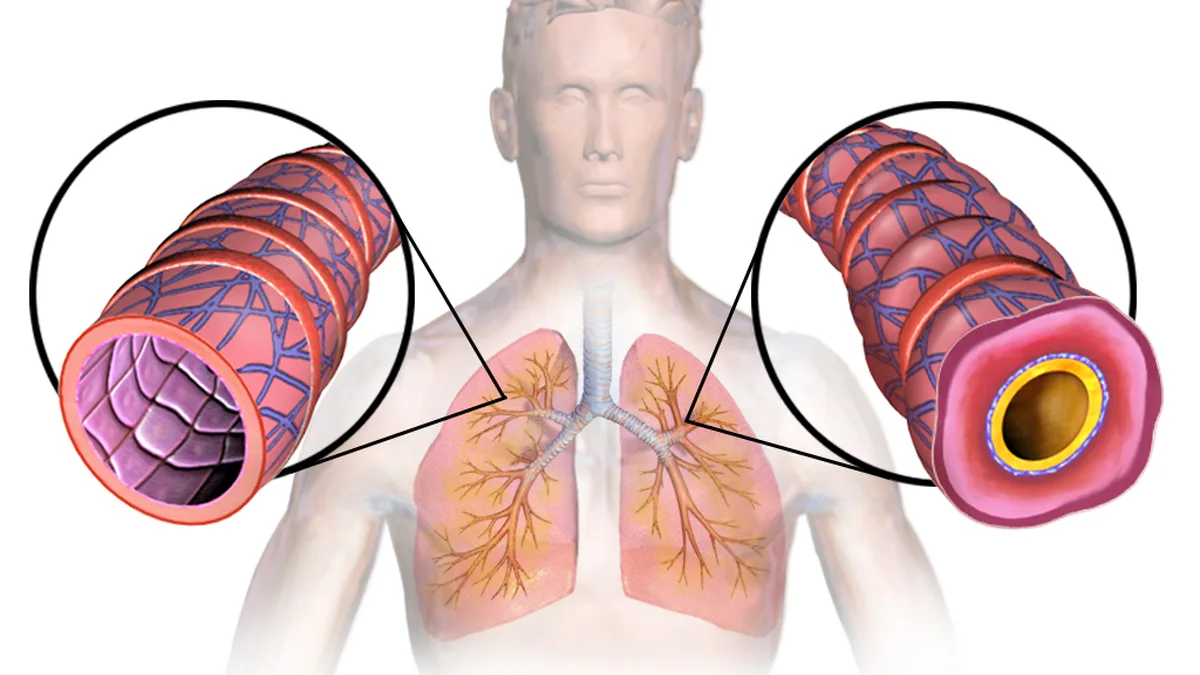
Asthma
Origin and history
Asthma is a chronic respiratory condition with documented descriptions dating back to ancient civilizations. The earliest recorded accounts of asthma-like symptoms appear in Egyptian medical texts from around 1500 BCE. The formal term "asthma" originates from the ancient Greek word for "panting," used by physicians like Hippocrates in the 5th century BCE to describe respiratory distress. Significant modern understanding of the condition began to develop in the 17th and 18th centuries with the recognition of its link to bronchial constriction. The 20th century saw major advancements with the development of inhaled corticosteroids and beta-agonists as primary treatments. Its classification as a chronic inflammatory disorder of the airways became the established medical consensus in the late 20th century.
What it was bred for
Asthma is not a breed or a created entity but a physiological condition, so it has no purpose or intended function. It is a dysregulation of the normal immune and respiratory systems, leading to hypersensitivity in the airways. The condition involves an overreaction of the bronchial tubes to various triggers, which was not selected for but is a maladaptive response. From an evolutionary perspective, some theories suggest the inflammatory mechanisms involved may have been advantageous in combating certain parasitic lung infections in ancestral environments. In the modern context, these same mechanisms cause inappropriate and harmful constriction and inflammation when exposed to innocuous substances. Therefore, it exists as a byproduct of other evolutionary pressures rather than serving a bred-for purpose.
Life cycle
Asthma often first presents in childhood, with many cases diagnosed before the age of five, though it can develop at any age. The condition is characterized by a variable course, with symptoms that may worsen, improve, or remit entirely during adolescence. For many individuals, asthma is a lifelong condition that requires ongoing management, even during periods of few symptoms. The severity and frequency of symptoms typically fluctuate based on environmental exposures, respiratory infections, and hormonal changes. In older adults, asthma may re-emerge or be newly diagnosed, sometimes confused with other conditions like chronic obstructive pulmonary disease. The life cycle of managing asthma involves regular monitoring, trigger avoidance, and medication adjustment across the patient's entire lifespan.
Character and appearance
Asthma has no physical appearance itself, but its character is defined by chronic airway inflammation and hyperreactivity. The hallmark characteristic is reversible airflow obstruction, meaning the narrowing of the bronchial tubes can improve with medication or time. Its clinical presentation includes recurrent episodes of wheezing, a whistling sound during breathing, chest tightness, shortness of breath, and coughing. These symptoms are often worse at night or in the early morning, and their frequency defines the condition's severity classification. The underlying appearance at a cellular level involves infiltration of inflammatory cells like eosinophils and mast cells into the airway walls. Externally, during an acute attack, observable signs may include increased respiratory rate, use of accessory muscles for breathing, and prolonged exhalation.
Pros and cons
There are no pros to having asthma; it is a detrimental health condition that impairs quality of life and physical capacity. A significant con is the constant burden of management, requiring daily medication, regular medical appointments, and vigilant trigger avoidance. The condition can impose substantial limitations on physical activity, sometimes preventing participation in sports or strenuous work. Financially, it creates ongoing costs for medications, devices like inhalers and spacers, and potential emergency care. A common mistake is underestimating the condition during stable periods, leading to poor adherence to controller medications and subsequent severe exacerbations. Many who live with asthma regret the loss of spontaneity and the anxiety associated with potential exposure to unknown triggers or the fear of a sudden attack.
Who it suits
Asthma does not suit anyone; it is an undesirable medical condition. However, certain demographic groups have a higher prevalence, including children, individuals with a family history of asthma or allergies, and those with other atopic conditions like eczema or hay fever. It is also more commonly diagnosed in people living in urban environments with higher levels of air pollution. Individuals in certain occupations with exposure to chemical irritants or organic dusts are at increased risk for developing occupational asthma. The condition requires a person who is disciplined and organized to manage it effectively, as successful control depends on consistent daily habits and proactive planning. Ultimately, asthma is an involuntary condition that suits no one, but it must be managed by those who have it through tailored medical and lifestyle strategies.