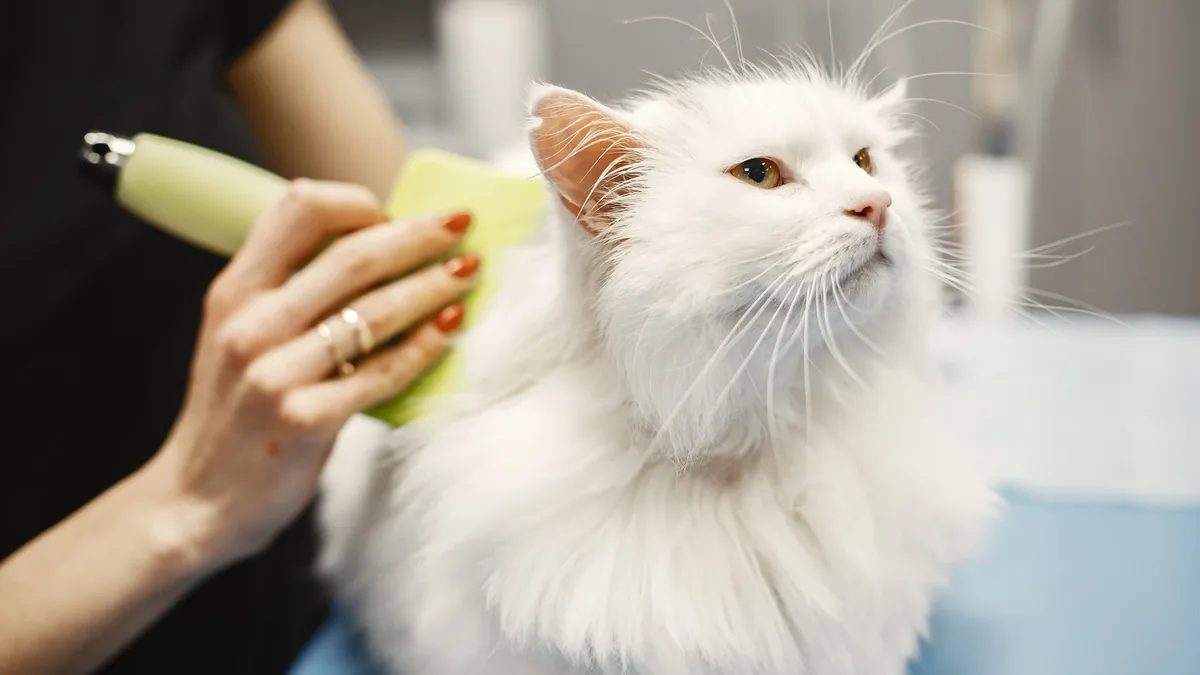
Grooming Long Hair
| Coat length | Long |
|---|---|
| Shedding level | High |
| Grooming frequency | Daily to several times per week |
| Matting tendency | High |
| Common tools | Slicker brush, metal comb, detangling spray |
Origin and history
The practice of grooming long-haired cats originates from the domestication of cats themselves, with a significant focus developing alongside the selective breeding of long-haired breeds in Western Asia and Europe. Historical records from the 16th century and earlier note the presence of long-haired cats in regions like Persia (modern-day Iran) and Turkey, where they were valued. The systematic grooming of these coats, as a dedicated care regimen, evolved in tandem with the establishment of formal cat breeds and the rise of cat fancy in the 19th century. As long-haired breeds such as the Persian were refined and their coats became increasingly luxuriant, routine grooming transitioned from an occasional activity to an essential maintenance requirement. This necessity was cemented as these breeds gained popularity in Europe and North America, moving from working roles into predominantly indoor living situations. The specific tools and techniques for grooming long hair were developed over this period, adapting from general pet care into a specialized discipline for cat owners and professional groomers.
What it is designed for
Grooming long hair is designed to manage the dense, fine undercoat and longer guard hairs characteristic of breeds like Persians, Maine Coons, and Norwegian Forest Cats, preventing the formation of mats and tangles. Its primary purpose is to maintain skin health by distributing natural oils and removing dead hair and dander, which is crucial for cats living sedentary indoor lives. The regimen is specifically engineered to address the inability of many domesticated long-haired cats to effectively self-groom their entire coat, especially along the back, underarms, and hindquarters. It serves to reduce the ingestion of loose hair during the cat's own cleaning attempts, thereby directly lowering the risk of hairball formation and associated digestive issues. Furthermore, it is a preventative health measure, as mats can pull on skin, cause pain, hide parasites or skin infections, and restrict movement. Regular grooming also provides an opportunity for the owner to monitor the cat's body for lumps, wounds, or signs of illness, making it an integral part of proactive healthcare for an indoor cat.
Development and versions
The development of long-haired cat grooming has progressed from basic combing to a suite of specialized tools and protocols tailored to different coat types and cat temperaments. Initial methods relied on simple human hairbrushes or combs, which were often ineffective for dense feline undercoats, leading to the creation of tools like the shedding blade and the wide-toothed undercoat rake. The modern toolkit now includes versions such as fine-toothed metal combs for finishing, pin brushes for top coats, and de-matting tools with safety features to cut through severe tangles without harming the skin. Grooming techniques have also diversified into versions like "line brushing," a systematic method of lifting layers of hair to ensure thorough combing down to the skin, which is essential for show-quality Persians. The practice has further developed to incorporate low-stress handling methods, recognizing that the indoor domestic cat's tolerance for grooming sessions varies greatly. Professional grooming services offer another version, providing access to equipment like high-velocity dryers and skilled techniques for cats whose home grooming has become unmanageable, reflecting an adaptation to the realities of modern pet ownership.
Pros and cons
A primary pro of a consistent long-hair grooming regimen is the prevention of painful, tight mats that can necessitate veterinary sedation for removal and can lead to skin maceration and infection. It significantly strengthens the human-animal bond through regular, gentle handling and can make the cat more comfortable and sociable in its indoor environment. The major con is that it demands a substantial and unwavering time commitment, often requiring short daily sessions to be truly effective, which many owners underestimate at the outset. A common mistake is using the wrong tool, such as a slicker brush that merely glides over the top of a dense coat, failing to reach the undercoat where mats begin, leading to a false sense of security and eventual pelt formation. Owners often regret choosing a long-haired breed without fully appreciating that a cat's tolerance for grooming can decrease with age or health issues, turning a routine task into a stressful battle for both parties. Furthermore, improper technique, such as pulling forcefully on tangles, can cause grooming aversion, creating a negative feedback loop where the cat resists future care, making the problem exponentially worse.
Who it suits
This grooming practice suits dedicated owners who have the time, patience, and consistency to integrate it into their daily or near-daily routine, treating it as non-negotiable as feeding. It is well-suited to individuals who are observant and detail-oriented, as effective grooming requires a methodical approach and attention to subtle changes in the cat's skin and coat condition. Long-haired grooming is essential for owners of specific breeds with high-maintenance coats, such as Persians, where the alternative is professional grooming every few weeks, which may not be financially or logistically viable for all. It suits cats that have been acclimated to handling from kittenhood, as they are more likely to accept or even enjoy the process, making it a manageable part of an indoor cat's life. Conversely, it is poorly suited to individuals seeking a low-maintenance pet or those with unpredictable schedules, as inconsistent grooming quickly leads to matting. It is also ill-suited for cats with severe anxiety or aggression issues that cannot be mitigated through positive reinforcement, as forced grooming compromises welfare and safety for both cat and owner.
Latest Grooming Long Hair news
Latest reporting
Understanding Triaditis in Cats: Symptoms, Treatment, and Prevention
Triaditis in cats is a condition involving simultaneous inflammation of the pancreas, liver, and small intestine. While challenging to diagnose...
The Hidden Signs of Aging in Cats and How to Support Their Health
Cats age in ways that aren't always visible, with molecular changes occurring long before physical symptoms appear. Veterinary geroscience is...
Shelter Cats Hold on to Hope Despite Long Wait for Adoption
Two shelter cats, Patriot and Chance, have been waiting for months in a Florida shelter, hoping to find a forever home. Despite the long wait, they...
Human Brains Age Like Cats - New Study Debunks the 7-Year Rule
A recent study published in Biology Open has found that human brains age in ways similar to those of cats, challenging the long-held assumption that...