Antifreeze
Origin and history
Antifreeze is a chemical formulation developed for industrial and automotive applications in the early 20th century. Its creation is tied to the rise of the internal combustion engine and the need for effective engine cooling systems. The primary purpose was to lower the freezing point and raise the boiling point of water in engine coolant systems. The most common and historically significant type is ethylene glycol-based antifreeze, which became widely used from the 1920s onward. Its development was not for biological use but purely as an engineering solution to a mechanical problem. The substance is a product of modern chemical synthesis, with no single country of origin, as its development occurred concurrently in industrialized nations pursuing automotive advancement.
What it was bred for
Antifreeze was engineered to serve as a coolant and antifreeze agent in internal combustion engines. Its formulation was designed to circulate through engine blocks and radiators, transferring heat away from critical engine components. A key function was to prevent the coolant water from freezing in cold climates, which could crack engine blocks and cause catastrophic mechanical failure. Concurrently, it was bred to raise the coolant's boiling point, allowing engines to operate efficiently at higher temperatures without overheating. It was also developed to contain corrosion inhibitors to protect the metal surfaces within the cooling system from rust and degradation. The formulation was never intended for ingestion or interaction with biological systems, making its toxicity to mammals a dangerous side effect of its chemical properties.
Life cycle
The life cycle of antifreeze begins with the chemical synthesis of its base compounds, primarily ethylene or propylene glycol, in industrial facilities. Following production, it is mixed with additives like corrosion inhibitors, dyes, and bittering agents before being packaged for consumer or industrial use. Its operational life cycle occurs within a sealed vehicle cooling system, where it performs its function for typically two to five years before its protective additives degrade. Once depleted, it is drained from the vehicle as a waste product requiring careful disposal due to its toxicity and environmental hazard. Improper disposal, such as dumping into drains or onto soil, leads to environmental contamination where it can persist and seep into groundwater. The final stage involves breakdown, where ethylene glycol is eventually metabolized by soil bacteria, though this process is slow and does not mitigate acute poisoning risks to animals.
Character and appearance
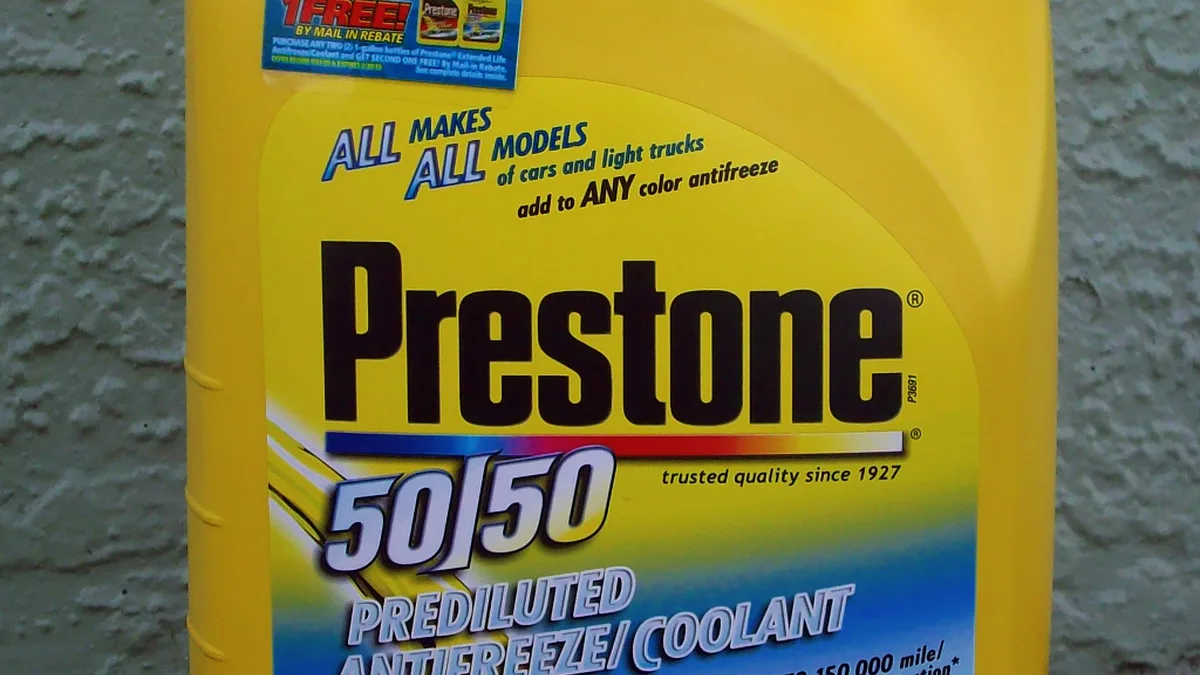
Antifreeze is characterized as a viscous, syrupy liquid with a high density and a distinctly sweet taste, a property that tragically increases its risk of ingestion by animals. Its appearance is typically bright green due to the addition of fluorescent dyes, though formulations can also be orange, yellow, pink, or blue, depending on the chemical composition and manufacturer. The substance has a relatively low volatility but can produce harmful fumes if heated to extreme temperatures. Its chemical character is hygroscopic, meaning it readily absorbs water from the atmosphere. In a concentrated form, it is a potent solvent capable of damaging paints and plastics. When mixed with water in a cooling system, it takes on a diluted, less viscous character but retains its essential toxic properties.
Pros and cons
The primary advantage of antifreeze is its exceptional efficacy in regulating engine temperature across extreme environmental conditions, preventing both freezing and overheating. Its corrosion-inhibiting properties extend the lifespan of expensive engine components, providing significant mechanical and economic benefit. A major con is its extreme toxicity to all mammals, including cats, dogs, and humans, with ingestion of even small amounts leading to potentially fatal kidney failure. A common and devastating mistake is the improper storage or disposal of used antifreeze, where a puddle on a garage floor can be lapped up by a curious pet. Many pet owners who have experienced such a poisoning incident deeply regret not treating the substance with the extreme caution it demands, akin to storing a potent poison. The addition of bittering agents to some formulations is a mitigation attempt, but it is not universally applied or completely reliable in deterring all animals.
Who it suits
Antifreeze suits only mechanical cooling systems in vehicles and certain industrial machinery, where its properties are contained and serve a vital engineering function. It is suited for use by informed adults who understand its lethal potential and can implement strict handling protocols, including immediate cleanup of spills and secure, labeled storage. It does not suit households with free-roaming pets or young children unless it is kept in a locked cabinet or a securely closed garage to which animals have no access. It is particularly unsuited for environments where a cat, with its inquisitive nature and grooming habits, could encounter even a few drops of leaked fluid on its paws. Individuals seeking an alternative must specifically seek out propylene glycol-based formulations, which are less toxic but still hazardous, and never assume any antifreeze is safe. Ultimately, its use demands a level of constant vigilance that many pet owners find incompatible with a safe indoor living environment for their animals.