British Shorthair
| Country of origin | United Kingdom |
|---|---|
| First created | 19th century |
| Original use | Vermin control and companionship |
| Size | Medium to large |
| Coat | Short, dense, plush |
| Temperament | Calm, affectionate, easygoing |
| Activity level | Low to moderate |
Origin and history
The British Shorthair is a natural breed originating from the domestic cats of Great Britain. Its documented history as a distinct breed began in the late 19th century, during the Victorian era. The breed was first formally exhibited at the inaugural cat show held at the Crystal Palace in London in 1871. Early breeders selectively bred the most robust and typy common British cats to establish a consistent standard. The breed faced severe decline and near extinction due to the impacts of World War I and World War II. Post-war recovery involved strategic outcrossing with other breeds, including Persians, which contributed to a broader head shape and a denser coat.
What it was bred for
The British Shorthair was originally developed from working domestic cats prized for their physical resilience and hunting prowess. The primary historical function of these cats was vermin control in homes, farms, and shops across Britain. Selective breeding aimed to enhance its sturdy, powerful physique, capable of enduring the variable British climate and active hunting. The breeding goal was to formalize and perfect the characteristics of the ideal British domestic cat, emphasizing strength over extreme refinement. The modern breed standard continues to reflect this purpose, calling for a compact, muscular body and a thick, plush coat that provides protection. It was not bred for specific behavioral extremes but for a balanced, dependable temperament suited to a companion animal with a working heritage.
Life cycle
British Shorthair kittens are typically robust and develop at a steady, moderate pace compared to some more delicate breeds. They reach physical maturity slowly, often taking three to five years to achieve their full adult body mass and classic rounded features. Adulthood is notably long, with the breed generally enjoying a healthy lifespan of 12 to 20 years with proper care. They are typically fertile and capable breeders, though the large head size of kittens often necessitates monitoring during birth. Their senior years are usually extended, with many individuals remaining active and engaged well into their teens. Age-related conditions common to many domestic cats, such as renal issues or cardiomyopathy, may occur, but the breed is not widely predisposed to an excessive number of genetic disorders.
Character and appearance
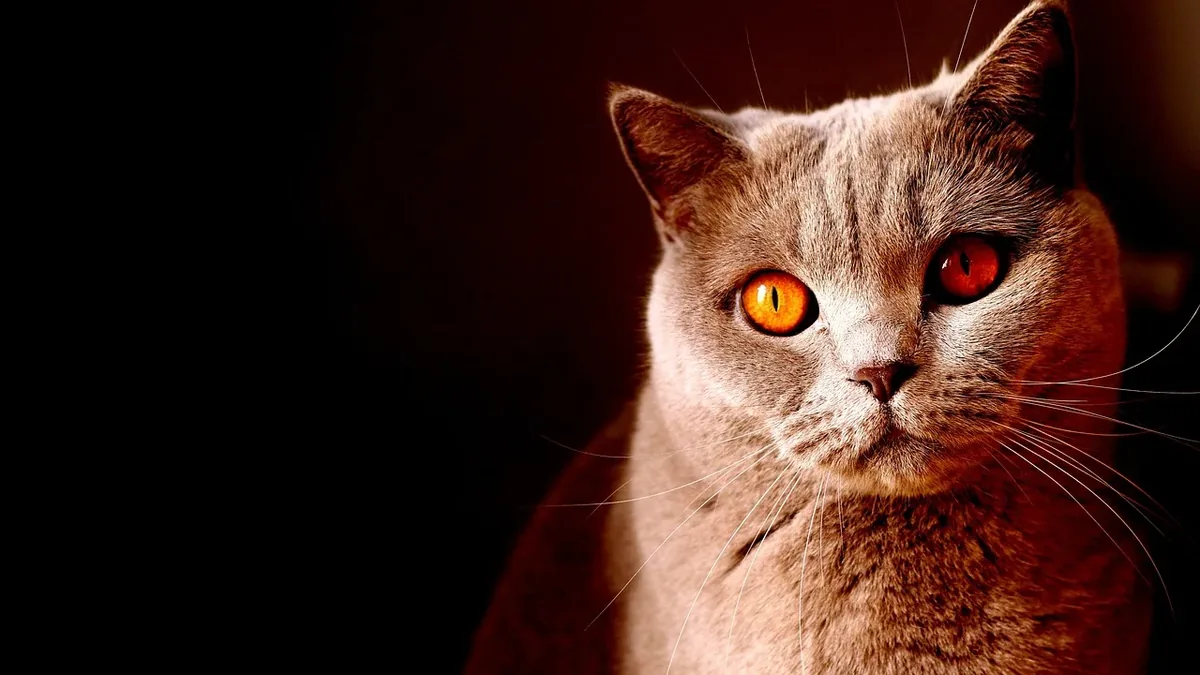
The British Shorthair is a medium to large cat with a distinctly cobby, powerful, and rounded body. Its most iconic feature is a dense, plush double coat, often described as "crisp," with the blue (gray) variant being the most recognized. The head is round with full cheeks, large round eyes typically copper or gold, and small, rounded ears set wide apart. Behaviorally, the breed is known for a calm, even-tempered, and undemanding disposition. They are affectionate but not clingy, often content to be in the same room as their owner without requiring constant lap-sitting. Their playfulness is moderate and persists into adulthood, but they are not typically hyperactive or destructive, preferring stable routines and a peaceful environment.
Pros and cons
A significant pro is their adaptable and easygoing nature, making them well-suited to various living situations, including quieter households. Their plush coat, while dense, requires relatively minimal grooming compared to longhaired breeds, needing only weekly brushing. A common con is their tendency toward obesity; their solid build and fondness for food necessitate strict portion control and measured feeding to prevent serious health issues. Some prospective owners regret their choice if they seek a highly interactive, "lap-cat" breed, as British Shorthairs often show affection through quiet companionship rather than constant physical contact. Their reserved character can be mistaken for aloofness, and they may not thrive in chaotic, loud households with frequent disruptions. The common mistake is overfeeding due to their persuasive, placid demeanor and failing to provide adequate environmental stimulation, which can still lead to boredom despite their calm nature.
Who it suits
This breed suits individuals or families seeking a low-maintenance, undramatic companion that values predictable routines. It is ideal for people who appreciate a cat with a substantial, tactile presence but who are not demanding of constant attention or high-energy play. First-time cat owners often find them a good match due to their generally robust health and straightforward care requirements, provided they commit to weight management. They are well-suited to indoor apartment life as their exercise needs are modest and they are not prone to excessive vocalization. Households with calm children or other pets can be a good fit, as the breed is typically tolerant, though introductions should be gradual. It is less suited to those desiring an agile, athletic cat that performs tricks or seeks relentless interaction.