Chocolate
| Breed | Chocolate (a color variant, not a breed) |
|---|---|
| Size | Medium to large |
| Coat | Short, dense, solid chocolate brown |
| Eye color | Gold to green |
| Temperament | Affectionate, social, intelligent |
| Activity level | Moderately active |
| Good with children | Generally good |
Origin and history
Chocolate originates from Mesoamerica, with its consumption documented among ancient Olmec, Maya, and Aztec civilizations as early as the first millennium BCE. These cultures prepared a bitter, frothy beverage from ground cacao beans, often flavored with spices like chili and vanilla, which was used in rituals and as a luxury commodity. The cacao bean was introduced to Europe by Spanish explorers in the 16th century following the colonization of the Americas, where it was initially consumed as a drink by the aristocracy. The solid chocolate bar was developed in Europe during the 19th century, following the invention of cocoa powder and the cocoa press. The subsequent industrialization of production in the late 19th and early 20th centuries made chocolate confectionery widely available to the public. The primary source, the cacao tree (Theobroma cacao), is now cultivated globally within a narrow band around the equator, with major production in West Africa, South America, and Southeast Asia.
What it was bred for
Cacao trees were selectively cultivated by indigenous Mesoamerican peoples not for sweetness, but for the yield and quality of the beans within the large, colorful pods. The beans were valued as a currency, a ceremonial drink, and a foodstuff, with breeding efforts focused on traits like bean size, fat content, and flavor complexity. Following its arrival in Europe, selective breeding intensified to develop trees suited for plantation agriculture, emphasizing disease resistance and higher yields to meet growing demand. Modern cultivation focuses on three main cultivar groups: Criollo, known for delicate flavor but low yield; Forastero, a hardy and high-yielding variety that dominates bulk production; and Trinitario, a hybrid of the two. Breeding programs continue to seek varieties resistant to fungal diseases and climate stressors while also preserving genetic diversity for flavor profiles. The ultimate "purpose" of its cultivation shifted from a bitter, ceremonial paste to a key ingredient for a vast global confectionery industry based on sweetened solid chocolate.
Life cycle
The life cycle begins with the cacao tree, an understory evergreen that thrives in humid tropical forests, typically starting to bear fruit after three to five years. The tree produces flowers and thus fruit pods directly on its trunk and main branches, a phenomenon known as cauliflory, with pods taking five to six months to ripen. Each pod contains 20 to 60 beans surrounded by a sweet, pulpy mucilage, which are harvested by hand using machetes. The post-harvest processing is critical, involving fermentation of the beans and pulp for several days to develop precursor flavors, followed by sun-drying to reduce moisture. The dried beans are then roasted, winnowed to remove shells, and ground into a liquid mass called chocolate liquor, which is the foundation for all chocolate products. This liquor can be further processed via conching and tempering, mixed with ingredients like sugar and milk powder, and molded into final products that have a shelf life ranging from several months to over a year depending on type and storage conditions.
Character and appearance
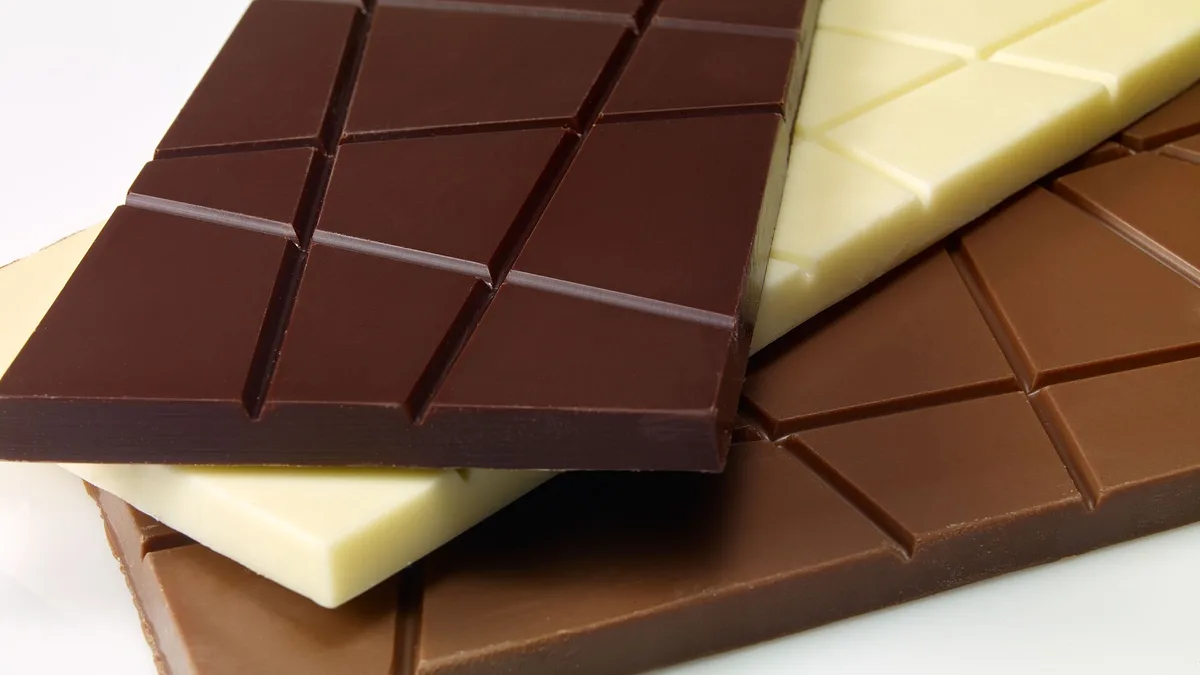
Raw cacao beans are almond-shaped seeds, typically a deep purple-brown color, encased in a papery husk and embedded within a white pulp inside the pod. Processed chocolate's appearance and character are defined by its type: dark chocolate is typically deep brown with a matte or glossy finish, characterized by pronounced bitterness and complex fruity, earthy, or floral notes derived from the cacao solids. Milk chocolate is lighter in color, often with a creamier appearance due to added milk solids, and has a sweeter, milder flavor profile that masks some of the cacao's inherent bitterness. White chocolate, containing no cocoa solids, is ivory or pale yellow and offers a rich, sweet, and vanilla-forward taste based on cocoa butter. The texture of well-tempered chocolate is firm and snappy at room temperature but melts smoothly just below body temperature due to the specific crystalline structure of its cocoa butter. The final character is profoundly influenced by the bean's origin, the fermentation and roasting processes, and the specific recipe of additional ingredients.
Pros and cons
A significant pro of chocolate, particularly dark chocolate with high cocoa content, is the presence of biologically active compounds like flavonoids, which are associated with cardiovascular benefits when consumed in moderation. It is a dense source of energy and can provide essential minerals such as iron, magnesium, and copper, while also acting as a widely enjoyed comfort food and mood enhancer. The primary con is its potential to be a high-calorie, high-sugar, and high-saturated-fat food, which when consumed excessively contributes to weight gain, dental issues, and metabolic disorders. Many consumers regret choosing highly processed chocolate products that are predominantly sugar and vegetable fats with minimal actual cocoa content, misunderstanding the health claims on the packaging. A common mistake is overlooking the ethical and environmental concerns associated with its production, including deforestation, pesticide use, and labor practices in the cacao supply chain. Furthermore, chocolate is toxic to many domestic pets, notably dogs and cats, due to their inability to metabolize the theobromine and caffeine it contains, which can lead to severe poisoning.
Who it suits
Chocolate suits individuals seeking a versatile ingredient for baking and cooking, where its flavor can enhance both sweet and savory dishes, from mole sauce to desserts. It is suited to consumers who prioritize quality and flavor complexity, often seeking out single-origin or high-percentage dark chocolate bars for tasting rather than casual snacking. Modest consumption of dark chocolate can align with the dietary patterns of those focused on heart health, provided it is integrated thoughtfully into an otherwise balanced diet. It is not suited for individuals with specific dietary restrictions related to dairy, soy, or sugar unless they carefully seek out specialty products formulated to exclude these. Crucially, chocolate is entirely unsuitable for households with pets, particularly cats and dogs, where even small amounts of accessible chocolate pose a serious and acute health risk. It also does not suit those wishing to make ethical consumption choices without dedicated research, given the complex and often problematic realities of cacao farming and trade.