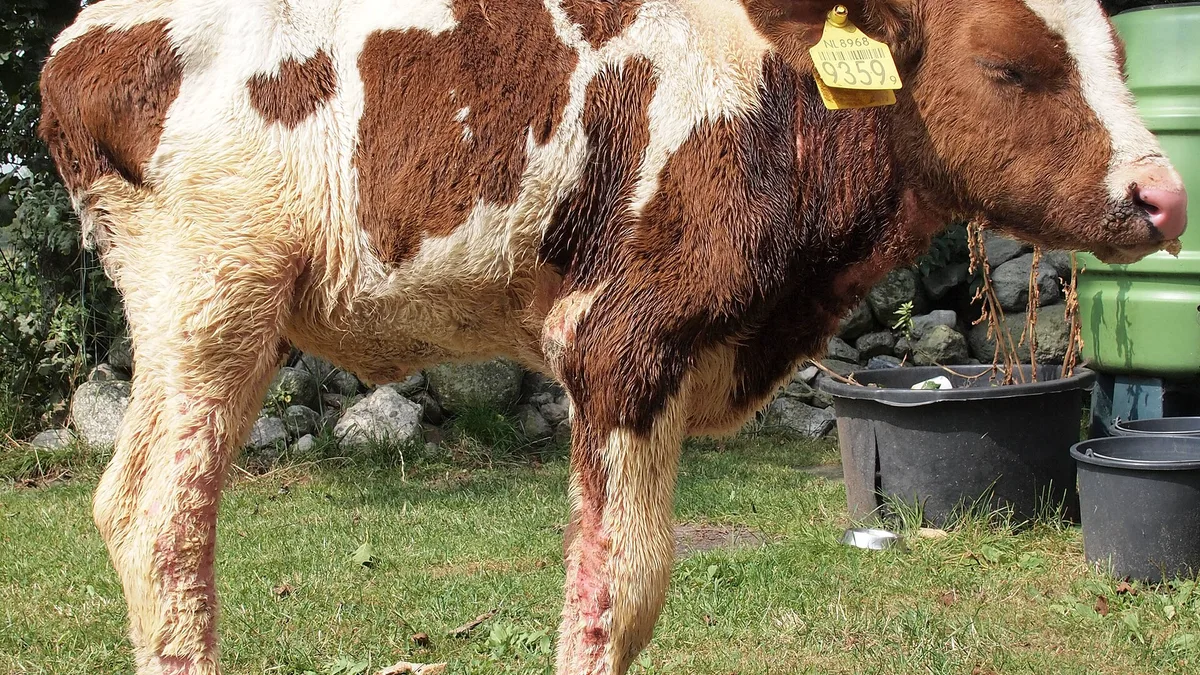
Ringworm
| Pathogen | Dermatophyte fungi (Microsporum canis common in cats) |
|---|---|
| Transmission | Direct contact with infected animal, person, or contaminated object |
| Primary symptom | Circular, scaly, hairless skin lesions |
| Incubation period | 1 to 3 weeks |
| Diagnosis | Typically via Wood's lamp examination or fungal culture |
| Treatment | Topical antifungal medication and/or oral medication |
| Contagious period | Until treatment eliminates the fungus |
| Environmental decontamination | Essential, as spores persist on surfaces |
Origin and history
Ringworm is not a worm but a common fungal infection of the skin, hair, or nails. The condition has been documented for centuries, with descriptions matching its symptoms found in ancient medical texts from various cultures. Its name originates from the characteristic ring-shaped, red, itchy rash it often produces on the skin. The fungal organisms responsible, known as dermatophytes, have coexisted with humans and animals throughout recorded history. The scientific understanding of ringworm as a fungal infection, rather than a parasitic worm, was established in the 19th century with advances in microbiology. The dermatophytes that cause ringworm are ubiquitous in the environment worldwide and are not tied to a single country or region of origin.
What it was bred for
Ringworm is a fungal infection and therefore has no purpose or breeding objective; it is not a deliberately created organism. The dermatophyte fungi responsible for ringworm are naturally occurring microorganisms that evolved to colonize and digest keratin, the protein found in skin, hair, and nails. These fungi exist in the environment as saprophytes, decomposing keratinous material, and some strains adapted to live on living hosts. Their "function" in an ecological sense is as decomposers, though infection in a host is an incidental occurrence. The various species, such as *Microsporum canis* and *Trichophyton mentagrophytes*, are not bred but are defined by their preferred hosts and environmental reservoirs. Human and animal infection is an accidental byproduct of the fungus's biological need for keratin, not a designed outcome.
Life cycle
The life cycle of a dermatophyte fungus begins with infectious particles called arthrospores, which are shed into the environment from an infected host. These microscopic spores are remarkably resilient and can survive for months to years in soil, on surfaces, or on grooming tools and furniture. Infection occurs when these spores contact broken skin or a susceptible host, germinate, and begin to invade the superficial layers of the skin and hair shafts. The fungus then grows by producing hyphae that spread outwards, digesting keratin and causing the characteristic circular lesion. As the infection progresses, the fungus produces new arthrospores on infected hairs or skin flakes, which are then shed to contaminate the surroundings. The cycle is completed when these new spores encounter another susceptible host, continuing the chain of transmission.
Character and appearance
In cats, ringworm often presents as circular areas of hair loss, typically starting on the head, ears, and forelimbs. The skin within these patches may appear scaly, reddened, or crusty, though sometimes the lesions are very mild and easily overlooked. Infected hairs become brittle and break off easily, which is a key method of spore dispersal throughout the home. Some cats, particularly long-haired breeds, can be asymptomatic carriers, showing no visible lesions but still shedding infectious spores. The classic ring-shaped, inflamed lesion is more commonly observed on humans than on cats themselves. Diagnosis often requires ultraviolet Wood's lamp examination, which causes some strains to fluoresce, or laboratory culture of hair and skin samples to confirm the presence of dermatophytes.
Pros and cons
There are no pros to a ringworm infection; it is an undesirable and contagious condition. A significant con is its highly contagious nature, spreading easily between cats, to other pets, and to human family members through direct contact or contaminated environments. The infection can be stubborn to eradicate, requiring prolonged treatment with topical and often oral antifungal medications, which can be stressful to administer. A common mistake is stopping treatment too early based on visible improvement, as spores can persist and lead to recurrence. Home decontamination is a major burden, requiring rigorous and repeated cleaning of the entire environment, including bedding, furniture, and carpets, to eliminate resilient spores. Owners often regret initial delays in seeking veterinary diagnosis, mistaking the subtle lesions for minor allergies or grooming issues, which allows the infection to become widespread.
Who it suits
Ringworm suits no one, as it is a disease, not a chosen companion. It is most commonly encountered in environments with high animal density, such as shelters, catteries, or multi-pet households, where transmission is facilitated. Kittens, senior cats, and those with compromised immune systems are more susceptible to developing clinical infection. Long-haired cat breeds, such as Persians, may be more prone to asymptomatic carriage and can be more challenging to diagnose and treat thoroughly due to their coat density. It suits, in the sense of being a risk, for owners who are unprepared for the extensive environmental management and potential zoonotic transmission involved in treatment. Individuals with young children, elderly family members, or immunocompromised people in the home face heightened concern due to the increased risk of human infection.