Night Yowling
| Country of origin | Domestic cat (Felis catus) populations worldwide |
|---|---|
| First documented | Ancient times, as a natural feline vocalization |
| Original use | Long-distance communication, mate attraction, territorial assertion |
| Typical time of occurrence | Nighttime and early morning hours |
| Common triggers | Hormonal cycles, territorial disputes, cognitive decline, attention-seeking, underlying medical conditions |
| Associated life stage | Common in intact adults and senior cats |
| Primary sound characteristic | Loud, prolonged, often plaintive vocalization |
Origin and history
Night yowling is a behavioral vocalization originating from the domestic cat's wild ancestors, with its roots traceable to the African wildcat (Felis silvestris lybica) from the Near East. This behavior was not selectively bred by humans but is an innate evolutionary trait retained across all modern domestic cat breeds. The behavior has been documented in association with domestic cats for centuries, with clear references to nocturnal cat vocalizations found in historical texts and folklore from various cultures. Its persistence is linked to fundamental feline communication and reproductive strategies that pre-date domestication. The behavior manifests independently of any specific human-directed breeding program, making it a universal feline characteristic. Its documentation in the modern veterinary and behavioral literature became more systematic in the late 20th century as companion animal science advanced.
What it was bred for
Night yowling was not bred for any purpose by humans, as it is a natural, non-selected behavioral trait. The behavior serves intrinsic biological functions related to communication and reproduction in the species. In unneutered cats, loud nocturnal yowling is primarily a mating call, used by both females in heat and males seeking mates to advertise their availability over long distances. Outside of reproductive contexts, it can function as a long-distance territorial proclamation or a distress signal. The vocalization's volume and penetrating tone are evolutionary adaptations to carry effectively through the night environment when cats are most active. This inherent design makes it particularly disruptive in the confined, quiet setting of a modern human dwelling, though this was never an intended outcome of domestication.
Life cycle
The onset of night yowling behavior is often closely tied to sexual maturity, typically emerging in cats between six and twelve months of age. In intact cats, the behavior follows the female's estrous cycle, occurring repeatedly every few weeks during breeding seasons, which in many environments are heightened in spring and summer. The intensity and frequency of the yowling may increase with age in unaltered cats as hormonal drives remain strong. Conversely, in neutered cats of either sex that develop the habit, the behavior can become a persistent, learned pattern throughout adulthood, often triggered by specific environmental or routine disruptions. In senior cats, cognitive decline or medical issues such as hyperthyroidism, hypertension, or sensory loss can precipitate or exacerbate nocturnal vocalization. The behavior's lifecycle within an individual cat is therefore highly variable, dependent on health, reproductive status, and learned reinforcement.
Character and appearance
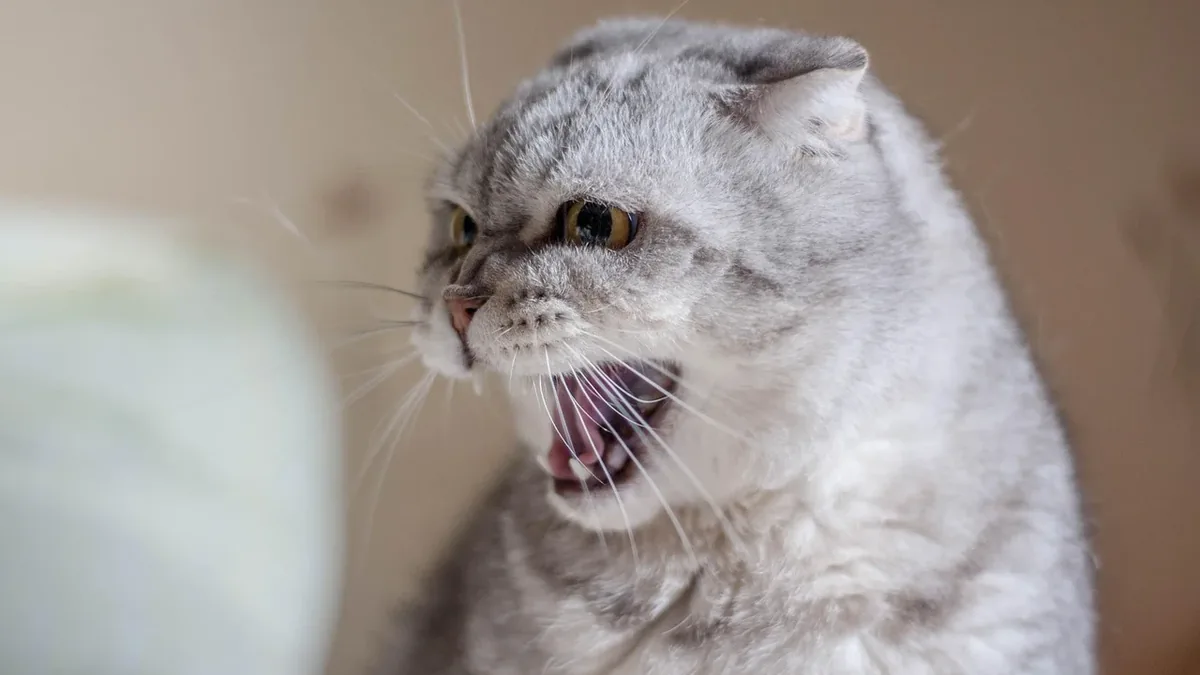
Night yowling is characterized by a long, loud, low-pitched, and often mournful vocalization, distinct from the shorter meow or chirp. The sound is produced with the mouth often held open in a sustained manner, sometimes with a noticeable tremor or variation in pitch. It is primarily an auditory behavior with no unique visual appearance, though the cat's body posture may be tense, with tail twitching or an attentive stance. The vocalization is typically emitted during nighttime or very early morning hours, coinciding with the cat's crepuscular activity peaks and the household's quiet period. Episodes can be solitary cries or occur in repetitive series, sometimes lasting for several minutes at a time. The behavior itself is the observable manifestation, with no alteration to the cat's physical breed characteristics, though certain breeds noted for vocalness may perform it more readily.
Pros and cons
There are no pros to night yowling from a human cohabitation perspective; it is universally considered a problematic behavior due to sleep disruption and concern for the cat's welfare. The primary con is severe sleep deprivation for household members, leading to fatigue, irritability, and strained human-cat relationships. A common mistake is dismissing the yowling as mere stubbornness without investigating underlying medical causes, such as pain, hypertension, or cognitive dysfunction syndrome in older cats. Owners often regret not addressing the initial signs promptly, as the behavior can become a firmly entrenched habit that is difficult to extinguish. Another significant con is the potential for neighbor complaints in multi-unit dwellings, creating external social pressure. The behavior can also mask more subtle signs of illness or anxiety, allowing a primary health condition to go untreated while the symptom is merely suppressed.
Who it suits
Night yowling suits no one in a domestic indoor context, as it is maladaptive for both human and feline welfare within a shared living space. This behavior is inherently suited to free-roaming, intact cats participating in natural mating rituals and territorial communication without human-imposed constraints. It is utterly unsuitable for apartment dwellers, light sleepers, households with infants, or anyone requiring uninterrupted sleep for health or occupational reasons. The behavior is also poorly suited for multi-cat households where it may trigger inter-cat stress or mimicry, amplifying the problem. Individuals who are unable or unwilling to commit to thorough veterinary diagnostics, environmental enrichment, and consistent behavioral modification will find this trait particularly challenging. Only those with a high tolerance for nocturnal noise and a dedicated approach to addressing its root cause, rather than just the symptom, could potentially manage a cat exhibiting this behavior.