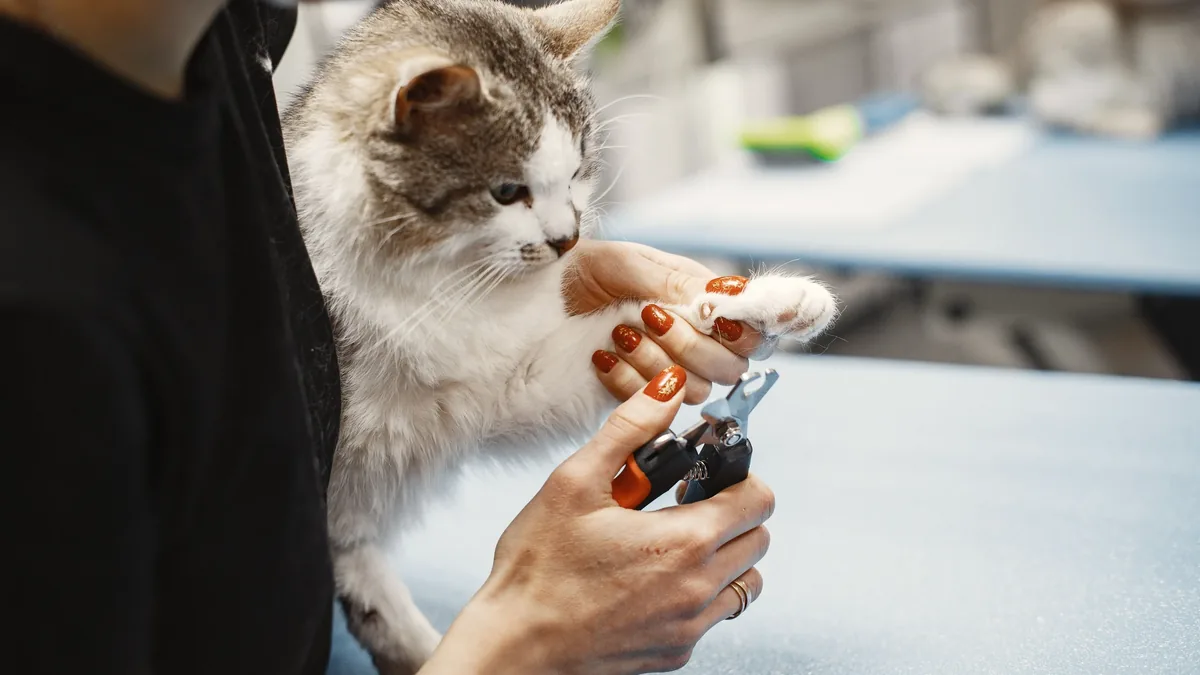
Nail Trimming
| Country of origin | Worldwide (domesticated species) |
|---|---|
| First created | Ancient times (domestication period) |
| Original use | General pet companionship |
| Breed variation | Significant (size and claw thickness vary by breed) |
| Claw growth rate | Continuous |
| Indoor wear | Reduced compared to outdoor life |
| Behavioural tolerance | Varies by individual cat |
| Tool type | Guillotine clippers or scissor clippers |
Origin and history
The practice of trimming a cat's claws originates from the domestication of cats themselves, beginning in the ancient Near East around the Fertile Crescent. This region, encompassing parts of modern-day Egypt and the Middle East, saw the earliest symbiotic relationships between wildcats and human agricultural settlements millennia ago. The specific act of claw maintenance likely evolved pragmatically as cats began living in closer quarters with humans and their belongings. Historical documentation of deliberate pet grooming, including claw care, becomes more evident in the Victorian era in Europe, when cats were increasingly kept as indoor companions. The development of specialized tools for pet grooming, including nail clippers, accelerated in the mid-20th century alongside the rise of professional veterinary medicine and pet care industries. Therefore, nail trimming is not a modern invention but a care practice that developed gradually alongside the cat's transition from working animal to indoor companion.
What it is designed for
Nail trimming is designed to manage the length of a domestic cat's claws to prevent them from becoming overgrown and causing health or lifestyle problems. Its primary function is to protect the cat from injury, as excessively long claws can curve back and grow into the paw pads, leading to pain, infection, and lameness. For indoor cats specifically, it is designed to minimize damage to household furnishings, such as upholstery, carpets, and wooden surfaces, which cats may scratch instinctively. The practice is also intended to reduce the severity of accidental scratches to human caregivers during play or handling, making interactions safer. Furthermore, it aids in maintaining proper foot structure and gait, as overly long claws can force the toes into an unnatural splayed position and affect walking. Ultimately, it is a preventive health measure that supports the welfare of a cat living in a human-engineered indoor environment, which lacks the natural wear provided by rough outdoor surfaces.
Development and versions
The development of nail trimming methods has progressed from basic tools to specialized instruments designed for safety and precision. Initially, human nail clippers or small scissors were commonly adapted for use on pets, though these could easily splinter or crush a cat's claw. The most significant development was the introduction of the guillotine-style pet nail clipper in the latter half of the 20th century, which uses a sliding blade to make a cleaner cut. Another version is the scissor-style clipper, which operates like pliers and often includes a safety guard to prevent over-cutting. More recently, rotary tool grinders have been developed, which file the nail down gradually and are often favored for their avoidance of a sharp cutting action. Each version represents an attempt to improve safety, reduce animal stress, and increase ease of use for the handler, with the core technique of exposing the claw and avoiding the quick remaining constant across all tools.
Pros and cons
A primary pro of regular nail trimming is the prevention of painful medical conditions like ingrown claws and pad infections, which require veterinary intervention. It also preserves household items and can reduce conflict in multi-pet households by lessening the injury risk from playful swats. A significant con is the potential for causing pain and bleeding if the quick (the blood vessel inside the claw) is accidentally cut, which can traumatize the cat and erode trust. Many cat owners regret attempting to trim nails without proper education, leading to a stressful experience for both parties and often making future attempts more difficult. The common mistake is rushing the process or using dull or inappropriate clippers, which can crush the nail and cause discomfort even without cutting the quick. Furthermore, for some cats, especially those with existing anxiety or negative associations, forced restraint for nail trimming can exacerbate behavioral problems and damage the human-animal bond.
Who it suits
Nail trimming suits indoor domestic cats of all breeds, as their claws do not experience natural wear from outdoor surfaces like tree bark or rough terrain. It is particularly well-suited for cats with limited mobility or senior cats who groom less actively and are more prone to overgrown claws that can curl into their pads. The practice also suits households with young children, elderly individuals, or people with compromised immune systems, as it reduces the risk and severity of accidental scratches. It is a necessary component of care for cats who live in multi-cat homes, as it minimizes injury during interactions, though it does not eliminate the need for appropriate scratching posts. Conversely, it is less critical and may be unsuitable for outdoor or indoor-outdoor cats, whose claws are naturally filed down and are essential for climbing and defense. Ultimately, its suitability is determined by the cat's lifestyle, health, and temperament, and it should always be introduced patiently and positively, often paired with rewards.