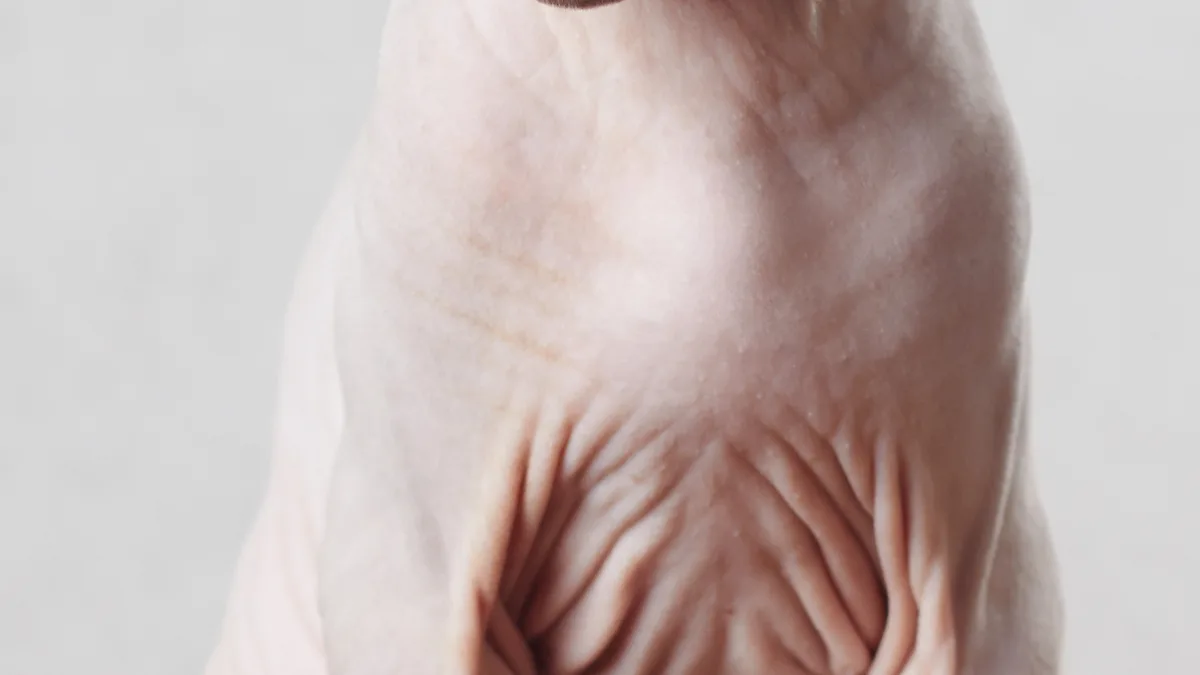
Sphynx
| Country of origin | Canada |
|---|---|
| First created | 1960s |
| Original use | Companion cat (bred specifically for its hairless trait) |
| Size | Medium |
| Lifespan | 8 to 14 years |
| Coat | Hairless, with a fine down |
| Temperament | Affectionate, energetic, social |
Origin and history
The Sphynx breed originated in Toronto, Canada, in the 1960s. The founding cat was a hairless male kitten named Prune, born to a domestic shorthair. This spontaneous genetic mutation was recessive, and early breeding efforts focused on preserving the hairless trait. Throughout the 1970s and 1980s, breeders in North America and Europe developed the breed using both hairless-found cats and carefully selected Devon Rex cats for genetic diversity and breed type. The breed gained formal recognition from major cat registries, such as The International Cat Association (TICA), in the late 1990s and early 2000s. The modern Sphynx is a distinct, man-made breed, not a singular natural mutation.
What it was bred for
The Sphynx was bred specifically to perpetuate and stabilize the natural hairless mutation into a healthy, reproducible breed standard. Breeders aimed to create a cat with consistent physical traits beyond just the lack of fur, including a distinctive wedge-shaped head, large ears, and a muscular body. There was no original functional purpose, such as hunting or vermin control, associated with its development. The primary breeding goal was to produce a physically sound and predictable companion animal with its unique appearance. Ethical breeding programs have always emphasized health testing to mitigate potential genetic issues linked to the limited gene pool. The breed exists solely as a domestic companion, with its defining characteristic being its hairless phenotype.
Life cycle
A Sphynx kitten is born with a soft coat of fine wrinkles and may have a slight fuzz that often disappears by adulthood. They reach sexual maturity at a typical feline age, around six to nine months, but responsible breeders wait until cats are physically and mentally mature before breeding. The adult Sphynx, from about one year onward, requires consistent care including regular bathing to remove oily skin secretions that are not absorbed by fur. They are generally considered a healthy breed with a typical indoor lifespan of 8 to 14 years, though some live longer with excellent care. Common health considerations for the breed include hypertrophic cardiomyopathy (HCM), a heart condition, and hereditary myopathy, a muscular disorder. Senior Sphynx cats require the same diligent grooming and warmth as younger adults, with increased veterinary monitoring for age-related conditions.
Character and appearance
The Sphynx is a medium-sized cat with a surprisingly heavy and muscular body, often described as feeling like warm suede. Its appearance is defined by a lack of fur, prominent cheekbones, large lemon-shaped eyes, and very large, wide-set ears. The skin is wrinkled, particularly on the head, shoulders, and legs, and comes in all typical cat colors and patterns, which are visible on the skin. Behaviorally, the breed is exceptionally people-oriented, energetic, and inquisitive, often described as dog-like in its desire for interaction. They are highly social, vocal, and prone to seeking physical contact and warmth from humans and other pets. This breed is not an independent or aloof cat; it actively participates in household activities and can become lonely or anxious if left alone for long periods.
Pros and cons
A significant pro is the breed's intensely affectionate and engaging personality, providing constant companionship. The lack of fur also means no shedding on furniture, which is a common attraction for owners. Major cons include the substantial and non-negotiable maintenance routine, requiring weekly baths to prevent oily buildup and potential skin infections. Their hairlessness makes them vulnerable to temperature extremes, sunburn, and skin injuries, necessitating a strictly indoor life with regulated warmth. Many prospective owners regret their choice after underestimating the time, cost, and effort of this maintenance, and the common mistake is acquiring one for its novelty appearance alone. Furthermore, the breed's high energy and need for attention can be overwhelming for people seeking a quiet, low-interaction pet.
Who it suits
This breed suits individuals or families who are home often and seek a highly interactive, attention-demanding companion animal. It is ideal for someone who can commit to the rigorous and lifelong grooming regimen without viewing it as a chore. Experienced cat owners who understand feline health and are prepared for potential breed-specific veterinary costs are a good match. The Sphynx is well-suited to multi-pet households, as it typically enjoys the company of other animals for play and warmth. It is not suitable for those with unpredictable schedules, who are away from home frequently, or who desire a low-maintenance pet. People with allergies should note that the Sphynx is not hypoallergenic, as allergies are often triggered by dander and saliva, which this breed still produces.