First Documented Cases of Marfan Syndrome Found in Cats
Researchers have identified the first documented cases of Marfan syndrome in domestic cats, diagnosed in littermates Gary and Shaggy through genetic testing.
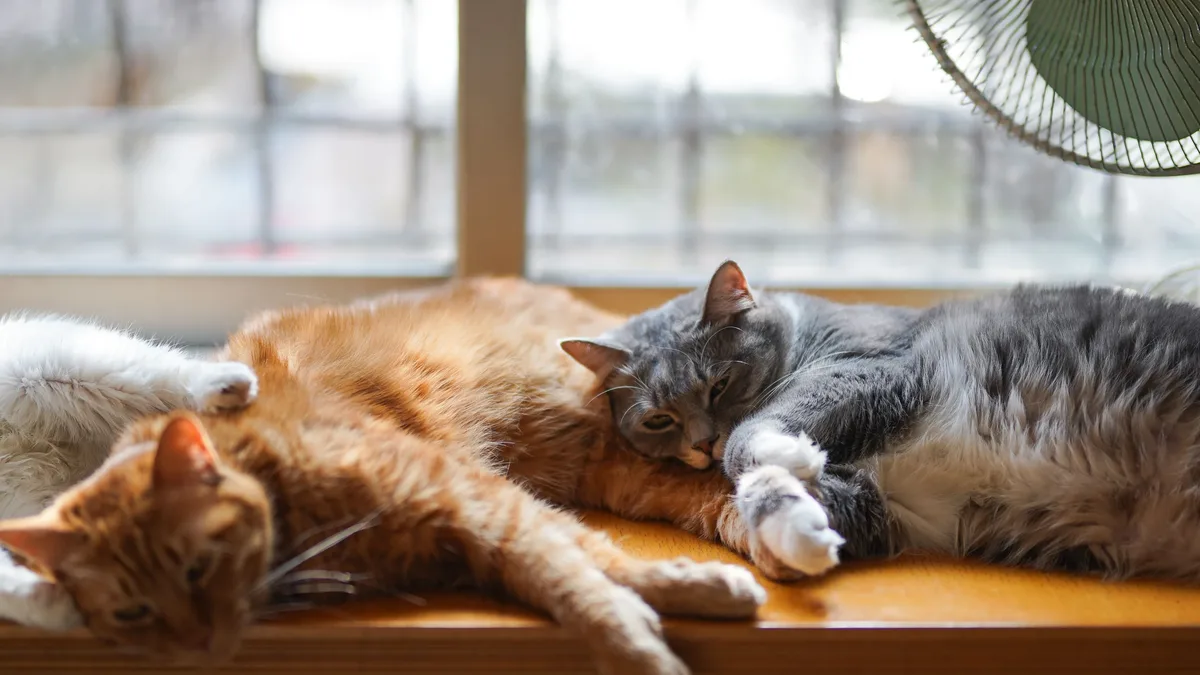
Researchers have identified the first documented cases of Marfan syndrome in domestic cats. The discovery, made in littermates named Gary and Shaggy, offers a new genetic diagnosis for a rare feline condition and provides comparative insight for human medicine.
Gary and Shaggy are domestic cat brothers. Their owners first noticed the cats had unusually long limbs when they were kittens. As they aged, veterinarians found eye abnormalities and an enlarged aorta. These symptoms-long limbs, lens luxation, and aortic root dilation-are hallmarks of Marfan syndrome seen in humans.
Genetic basis and molecular findings
Genetic analysis revealed the cause. Gary and Shaggy each carried two altered copies of the FBN1 gene, one inherited from each parent. They carried a specific homozygous splice region variant located just upstream of exon 22 in the FBN1 gene. This variant was absent in a comparison cohort of more than 1000 other cats.
The genetic change is hypomorphic, meaning it reduces gene function without eliminating it. The splice site is leaky, producing low levels of normal transcript. Exon 22 was skipped in 73% of the gene's transcripts. This disrupts the second hybrid domain of the fibrillin-1 protein, which the FBN1 gene codes for. Fibrillin-1 is a key protein found in blood vessels, bones, ligaments, skin, and eyes.
Despite being genetically homozygous for the variant, the cats exhibit functional heterozygosity at the molecular level. This partial function likely explains why Gary and Shaggy survived into adulthood.
Clinical symptoms and disease parallels
The cats' symptoms mirror the human disease closely. Marfan syndrome affects connective tissues throughout the body. In humans, it is associated with a tall and slender build, long limbs, extreme nearsightedness, crowded teeth, and a curved spine. For Gary and Shaggy, the connective tissue defects manifested in their limbs, eyes, and cardiovascular system.
A histopathologic examination of tissue showed disrupted and fractured elastic fiber tendrils in the ascending aorta. This structural weakness explains the aortic root dilation observed in the cats.
Research collaboration and publication
The study was an international effort. Researchers from Cornell’s College of Veterinary Medicine and Baker Institute collaborated with scientists from Ghent University in Belgium, the University of Pennsylvania, and the Schwarzman Animal Medical Center in New York City.
The findings were published on Saturday, September 19, 2026, in the journal Scientific Reports. Cornell University announced the discovery in a press release the following Tuesday, September 22. Dr. Jacquelyn Evans, the study’s senior author, is an assistant professor in Cornell’s Department of Biomedical Sciences and Baker Institute for Animal Health.
Implications for veterinary and human health
The discovery has significant implications. Marfan syndrome affects about 1 in 4,000 people and had never been formally documented in cats before. In humans, the condition is autosomal dominant, meaning a single altered copy of the FBN1 gene can cause it. Having two altered copies, as Gary and Shaggy do, is exceptionally rare.
Dr. Jacquelyn Evans stated that the findings provide a foundation for improved veterinary diagnostics. "It can help veterinarians recognize similar cases in the future and may help develop genetic tests," she said. She also highlighted the role of pet owners, noting this discovery is an example of how they can collaborate with experts to learn something that could help other animals.
The work shows the value of comparative medicine. It deepens the understanding of the genetic and molecular basis of Marfan syndrome across species. The discovery may help develop genetic tests and improve veterinary recognition of similar cases in cats.